Estimated reading time: 12 minutes
Drought tolerant plants are an excellent choice for a survival garden no matter where you live. Periods of little to no rain have plagued gardeners for centuries, even in mild climates. The month of July, in particular, always proves to be an obstacle for garden and herb crops.
You can garden successfully even in hot climates that are prone to periods of drought if you choose the proper plants to cultivate and grow them in a way that helps them retain moisture and flourish.
While fruit is the most difficult crop to grow during a drought, a vast array of vegetable and herb plants can survive drought conditions and still generate a robust harvest from the survival garden.
Disclaimer: Just because these are “drought tolerant” doesn't mean they can tolerate a drought indefinitely. Every plant has it's limit, and some plants in this list will do better than others, but in general these plants can handle high heat and dry spells much better than the average garden plant.
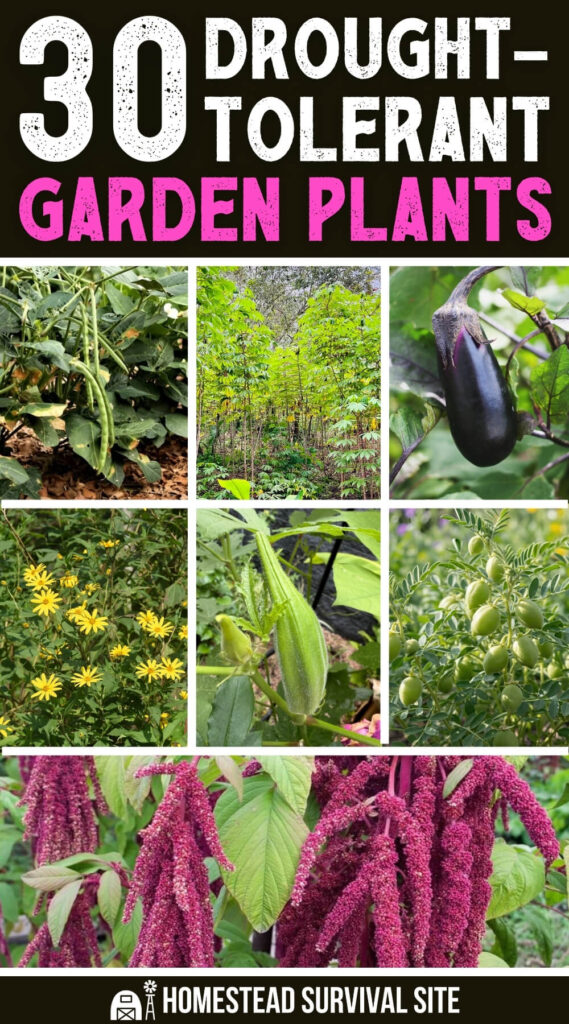
Top 30 Drought-Tolerant Plants
The following vegetable and herb crops are highly suitable for growing in drought conditions and in hot climates in general.
1. Amaranth
Amaranth is one of the best leafy crops for hot, dry weather because it keeps producing when spinach and lettuce have long since bolted. It is grown both for its nutritious leaves and its protein-rich seed.
2. Black-Eyed Peas
Also known as field peas or cowpeas, black-eyed peas are famous for thriving in poor soil and hot weather. They are one of the most dependable protein crops for a dry-climate survival garden.
3. Borage
Borage handles heat surprisingly well once established and often reseeds itself easily. Its edible flowers attract pollinators, making it useful near squash, cucumbers, and other garden crops.
4. Calendula
Calendula is a hardy medicinal and ornamental flower that can tolerate dry spells better than many common annuals. It is useful for salves and teas, and its bright blooms also help draw beneficial insects into the garden.
5. Cassava
Cassava is a staple survival crop in many hot regions because it can produce starchy roots in difficult growing conditions. It prefers warmth and a long season, and once established it handles dry periods well.
6. Chia
Chia is adapted to warm climates and does well in soil that drains quickly. It is valued for its edible seeds and generally performs better in dry conditions than in soggy ground.
7. Chickpeas
Chickpeas are naturally suited to semi-arid conditions and do not need as much water as many bean crops. They are an excellent storage food and a practical option for low-water gardening.
8. Dandelion
Dandelion is extremely resilient and can grow almost anywhere, including dry, neglected soil. The leaves, roots, and flowers are all useful, which makes it a valuable wild or cultivated survival plant.
9. Dragon Fruit
Dragon fruit is a cactus, so it is naturally adapted to dry conditions once established. In warm climates, it can provide a productive and unusual fruit crop with relatively low water needs.
10. Echinacea
Echinacea is both ornamental and medicinal, and it thrives in sunny spots with well-drained soil. Once established, it tolerates drought far better than many common garden flowers.
11. Eggplant
Eggplant loves heat and can keep producing through weather that stresses many other vegetables. It still benefits from consistent watering, but it is generally more forgiving of hot, dry conditions than crops like lettuce or peas.
12. Golden Oregano
Golden oregano is a hardy perennial herb that prefers full sun and moderate to low moisture. Once rooted in, it needs very little care and provides both culinary and ornamental value.
13. Grapes
Grapevines develop deep root systems that help them endure dry conditions once established. They are often a better fruit choice for drought-prone homesteads than shallow-rooted berry plants.
14. Heatwave Tomatoes
Heatwave tomatoes were bred to set fruit in hot weather when many tomato varieties stop producing. They still need water for best yields, but they are a smart choice for gardens with intense summer heat.
15. Jerusalem Artichokes
Also called sunchokes, these rugged plants are famous for producing edible tubers with very little fuss. They tolerate poor soil, heat, and dry spells better than many root crops.
16. Lavender
Lavender thrives in dry, sandy, or rocky soil and dislikes overly wet conditions. It is one of the classic drought-tolerant herbs and also offers medicinal, culinary, and pollinator benefits.
17. Mullein
Mullein is an exceptionally tough medicinal plant that grows well in dry, disturbed soil. Its fuzzy leaves and tall flower spikes make it easy to identify and useful for herbal remedies.
18. Mustard Greens
Mustard greens grow quickly and can handle more heat and dryness than lettuce or spinach. Even when conditions are rough, they often provide a dependable crop of peppery greens.
19. Okra
Okra is one of the best vegetables for hot, dry climates and keeps producing when many other crops fail. Its deep roots help it withstand drought once established, making it a true survival garden staple.
20. Peppers
Peppers are naturally suited to warm weather and can tolerate moderate drought better than many common vegetables. They usually produce best when watered consistently, but they are less fussy than crops with high moisture demands.
21. Pomegranate
Pomegranate is one of the best fruits for dry climates because mature trees handle drought extremely well. It is a smart long-term planting for anyone building a resilient homestead orchard.
22. Quinoa
Quinoa is known for growing in difficult conditions, including high elevations and relatively dry soils. Its seeds are highly nutritious, making it a strong choice for a self-reliant garden.
23. Rosemary
Rosemary is a classic dry-climate herb that prefers full sun and well-drained soil. Once established, it needs very little water and provides a steady supply of flavorful, useful leaves.
24. Sage
Sage is another Mediterranean herb that thrives in dry soil and bright sunlight. It is both culinary and medicinal, and it remains productive with minimal watering once mature.
25. Savory
Savory is an underrated herb that handles dry conditions well and adds strong flavor to beans, meats, and soups. It is easy to grow and fits nicely into a low-maintenance herb bed.
26. Sorghum
Sorghum is one of the most dependable grain crops for hot, dry regions. It was practically made for drought conditions and is often a better survival choice than corn where rainfall is unreliable.
27. Sunflowers
Sunflowers develop strong roots that help them reach moisture deep in the soil. They are tough, useful, and versatile, producing edible seeds while also supporting pollinators.
28. Sweet Potatoes
Sweet potatoes love heat and are much more forgiving of dry conditions than regular potatoes. Once established, they can keep growing in hot weather with relatively modest water.
29. Tarwi
Tarwi, also called Andean lupin, is a protein-rich legume valued in traditional mountain agriculture. It is known for tolerating poor soils and challenging conditions better than many common beans.
30. Thyme
Thyme thrives in dry, sunny locations and actually performs poorly in wet soil. It is one of the easiest herbs to grow in a drought-tolerant garden and is useful both fresh and dried.
Drought Crop Growing Tips
Soil
It all begins with the soil, no matter how amazing the seeds or starter plant are that you want to put in the ground. The nutrition of the soil is especially important when planning on growing successfully during times of drought.
To have healthy soil that will retain moisture during periods of little to no rain, make sure that the levels of nitrogen, phosphorus, and potassium are optimal. The exact amount of each nutrient needed in the soil will be specific to each plant that you are growing. If you are trying to keep fruit trees and bushes alive during a drought, ample amounts of these three essential nutrients will be necessary.
Because livestock manure contains a large amount of soluble salt, use it only sparingly as compost in a survival garden to survive a drought. Skipping the manure entirely may be advisable if keeping plants alive during a drought is a major concern. Manure compost has many advantages, and I have used it a lot when growing various types of plants, but it does have disadvantages, as well.
Arid soil, or soil that will become arid during a long drought, will have a high alkaline content. Lowering the pH levels in the soil to keep all plants, especially fruits, healthy will be necessary. Infusing the soil with sulfur is one tried-and-true way to bring down the pH level.
Sun Protection
The intense heat of the sun can cause both tip burn and scalding of plants during a drought. Using a tarp, dark sheet, or some other type of awning or protective covering can help prevent crops from being scorched and ultimately, killed.
Watering
It is never a good idea water plants from the top down, especially during a drought. Using a drop hose (soaker hose) that waters the plants at ground level should help prevent scorching during times of intense heat and no rain.
Always water crops in the survival garden in the morning or at dusk to further prevent them from getting scorched by the application of water as heat is raging all around them. While the amount of water each crop requires varies, it is the general rule of thumb that all plants need roughly two inches of water per week to survive.
The drought tolerant vegetable plants on the list above are prone to developing deep root systems which both help them sustain themselves when water is stunningly lacking yet the sun is intense.
Young plants will typically fare a lot better during a drought than recently planted seeds. If a drought hits or is anticipated to hit not long after you plan to plant seeds in the garden, consider sprouting them into young plants indoors before planting them. Once the plants are nearing the flowering stage, they are more likely able to withstand intense sun and a lack of natural watering.
If you absolutely need to get seeds into the ground right away to start cultivating a survival garden, consider using seeds that are quick growing and can be harvested in a shorter amount of time, like zucchini and spring radishes.
Intercropping Drought-Tolerant Plants
Intercropping simply means growing two or more crops together in the same space at the same time. In a drought-prone survival garden, the goal is not just to cram in more plants. The real purpose is to pair crops in a way that makes better use of sunlight, soil moisture, root depth, and growing time.
When done well, intercropping can help shade the soil, reduce evaporation, improve soil structure, and make the most of limited water. Intercropping often works best when gardeners combine crops with different heights, root systems, and growth habits, or mix legumes with non-legumes (for example, three sisters gardening).
A simple way to think about it is this: pair a tall crop with a lower one, a deep-rooted crop with a shallower-rooted one, or a heavy feeder with a nitrogen-fixing legume. Tall crops can reduce heat and wind stress for smaller plants, while legumes may improve overall soil health in mixed plantings.
How to Intercrop in a Dry Garden
Start by grouping plants with similar water needs. This is one of the most important steps in a drought garden because it prevents you from overwatering one crop just to keep another alive.
Next, combine plants that use space differently. For example, one crop may grow upright while another spreads across the soil as a living mulch. You can also combine a slower, larger crop with a quicker or lower-growing crop so the soil stays covered longer.
Leave more space than you would in a high-rainfall garden. Plants grown under dry conditions need less competition, better airflow, and enough room for their roots to hunt for moisture.
Finally, mulch heavily and water deeply. Intercropping helps, but it works best when paired with moisture-saving practices such as mulch, compost, and deep irrigation rather than frequent shallow watering.
Good Intercropping Combinations from This List
Amaranth + Black-Eyed Peas
Amaranth is a strong heat-loving crop that grows vertically, while black-eyed peas can occupy the lower level of the bed. This combination works especially well in a survival garden focused on both greens and dry seed crops.
Eggplant + Golden Oregano
Eggplant tolerates heat well, and oregano remains compact and drought hardy once established. Together they make a practical warm-season planting that combines a productive food crop with a durable culinary herb.
Grapes + Lavender or Rosemary
If your article includes longer-term food plantings, grapes can be underplanted with Mediterranean herbs that like dry conditions. That kind of grouping is useful because you are matching plants with similar cultural needs rather than forcing high- and low-water crops into the same bed.
Okra + Black-Eyed Peas
This is one of the most practical pairings for a hot-weather survival garden. Okra grows upright and handles intense heat well, while black-eyed peas help fill in the lower space and are one of the best drought-tolerant legumes for poor soil.
Peppers + Thyme
Peppers and thyme have similar preferences for heat and sun, and thyme stays low to the ground. This pairing makes sense in a dry garden because the plants do not demand wildly different watering schedules.
Rosemary + Sage + Thyme
This is less of a traditional row-crop intercrop and more of a dry-climate herb guild, but it works very well. All three herbs prefer full sun, good drainage, and relatively modest water, which makes them easy to grow together without wasting moisture.
Sorghum + Black-Eyed Peas
Sorghum provides height and light shade, and black-eyed peas make a strong companion because they are also adapted to hot, dry conditions. This is a smart combination when you want a grain crop and a protein crop in the same planting.
Sunflowers + Chickpeas
Sunflowers grow tall and deep-rooted, while chickpeas stay lower and are well suited to relatively dry conditions. The contrast in height and root pattern makes this a sensible low-water pairing.
Sweet Potatoes + Okra
Sweet potatoes spread along the soil surface and help shade the ground, which can reduce moisture loss. Okra grows upward, so the two crops use garden space differently instead of competing in exactly the same way.
One Important Rule
Intercropping works best when the plants actually belong together in terms of water needs, spacing, and growth habit. It's not magic, and it doesn't turn thirsty crops into drought-tolerant ones. The biggest mistake gardeners make is planting too densely or mixing crops with very different moisture requirements.
Final Thoughts
Preparing to grow a survival garden that is able to produce a sustainable harvest during a drought should be an essential part of any homesteader’s or prepper’s food security plan. While you can stockpile seeds explicitly to plant during a drought or for an SHTF event, it is far better to incorporate such plants into your annual survival garden now.
The success rates for the crops as well as the development of the soil will likely be much higher if you have experience cultivating both the plants and the dirt they grow in ahead of when there is a dire need to rely upon their harvest.
Heirloom seeds should be purchased for the drought-resistant survival garden plants whenever feasible. Saving some seeds from each year's crops will help to better ensure you have a variety strain that is hardy to your environment and growing soil. Proper storage of any type of seeds is essential to its potential germination and ultimately, the yield the plant that grows from it will produce, as well.
You May Also Like: