


Estimated reading time: 5 minutes

When cold and flu season hits, most people reach for over-the-counter syrups loaded with chemicals, artificial colors, and mystery ingredients. But what if you could make your own cough syrup using natural ingredients? One that not only soothes a sore throat but also strengthens your immune system?
This fermented lemon and honey cough syrup is a quick, powerful remedy that uses nature’s best anti-inflammatory, antibacterial, and antioxidant ingredients. Unlike herbal infusions or tinctures that take weeks to prepare, this one is ready in just 24 to 48 hours. It’s shelf-stable in the fridge for weeks, and it tastes amazing.
Want to save this post for later? Click Here to Pin It On Pinterest!
This tutorial is from a video by Homestead Corner. You can watch it and read the instructions below.
Fermented Lemon & Honey Cough Syrup: Step-by-Step Guide
Ingredients:
- 1–2 lemons, sliced thin
- 1–2 inch piece of fresh ginger, sliced (peel if not organic)
- 1 cup of raw, unfiltered honey (local if possible)
- (Optional) 6–10 whole cloves
- (Optional) 1 cinnamon stick, broken into pieces
Tip: Raw honey is essential for the fermentation process. Don’t use pasteurized honey.
Tools Needed:
- Pint-sized glass jar with lid
- Cutting board and knife
- Small strainer or cheesecloth
- Spoon or skewer (for stirring)
- Bowl (for straining finished syrup)
Instructions:
Step 1: Wash & Prep
Soak your lemons and ginger in a mix of baking soda and water to remove any pesticides or wax. Rinse well. If your ginger isn’t organic, peel it.
Step 2: Slice the Ingredients
Cut the lemons and ginger into thin slices. The more surface area, the more goodness the honey can extract.

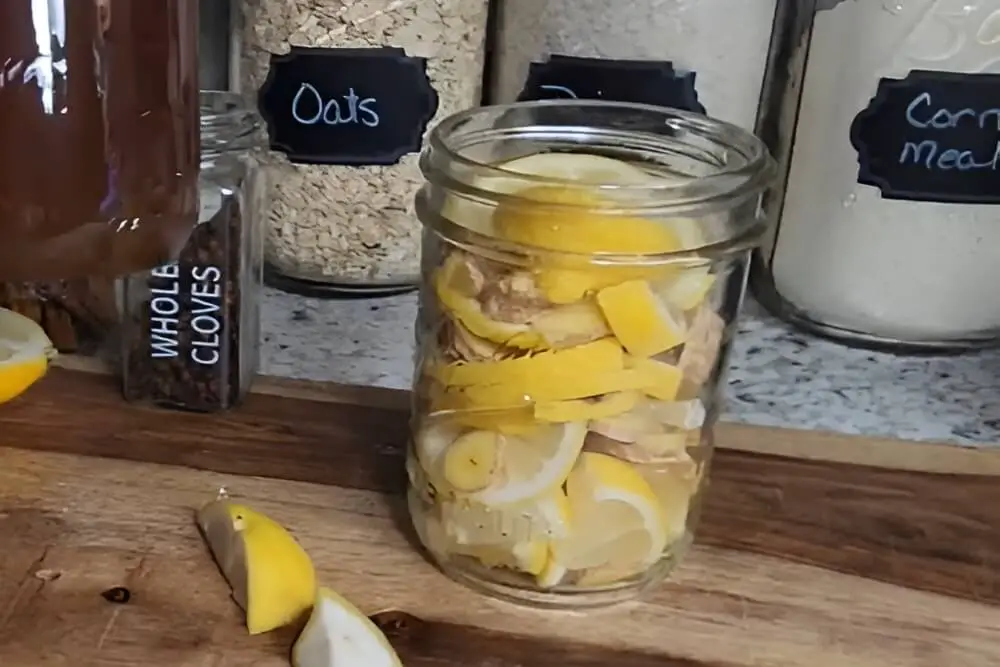
Step 3: Layer in the Jar
Start layering lemon and ginger slices into your jar. Add a few cloves and pieces of cinnamon if using. Keep layering until you reach about 1 inch from the top of the jar.
Step 4: Add the Honey
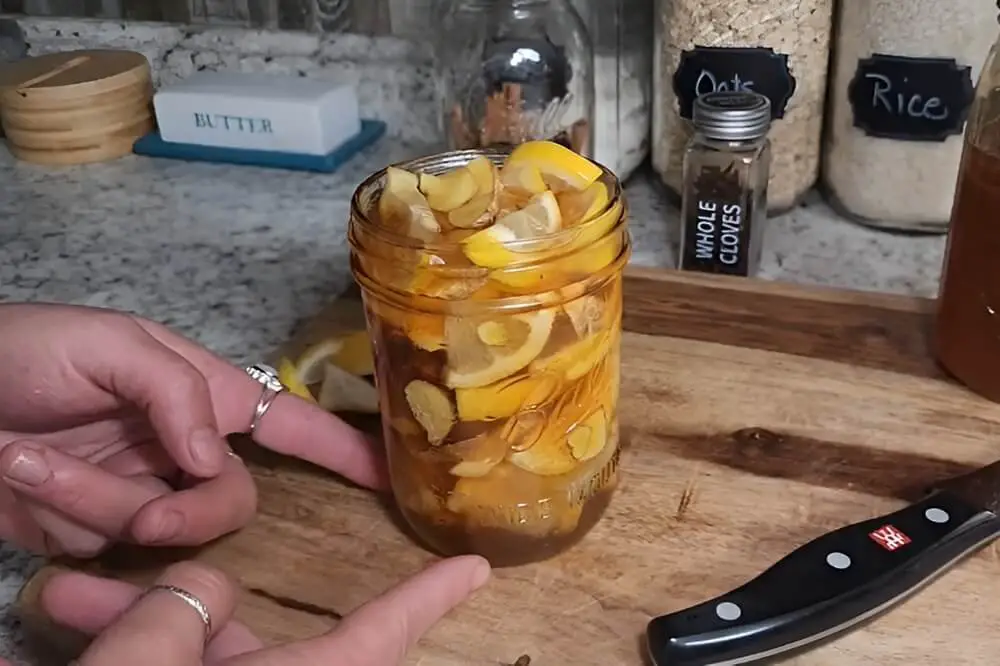
Pour raw honey over the ingredients until everything is fully covered. Use a skewer to poke around and remove air bubbles. Make sure the honey seeps into all the gaps.

Step 5: Cover & Ferment
Place the lid on top, but don’t tighten it! You want some air to escape during fermentation. Leave the jar on your counter at room temperature for 24 to 48 hours.
You may notice small bubbles forming. This is normal and a sign of healthy fermentation.
Step 6: Strain
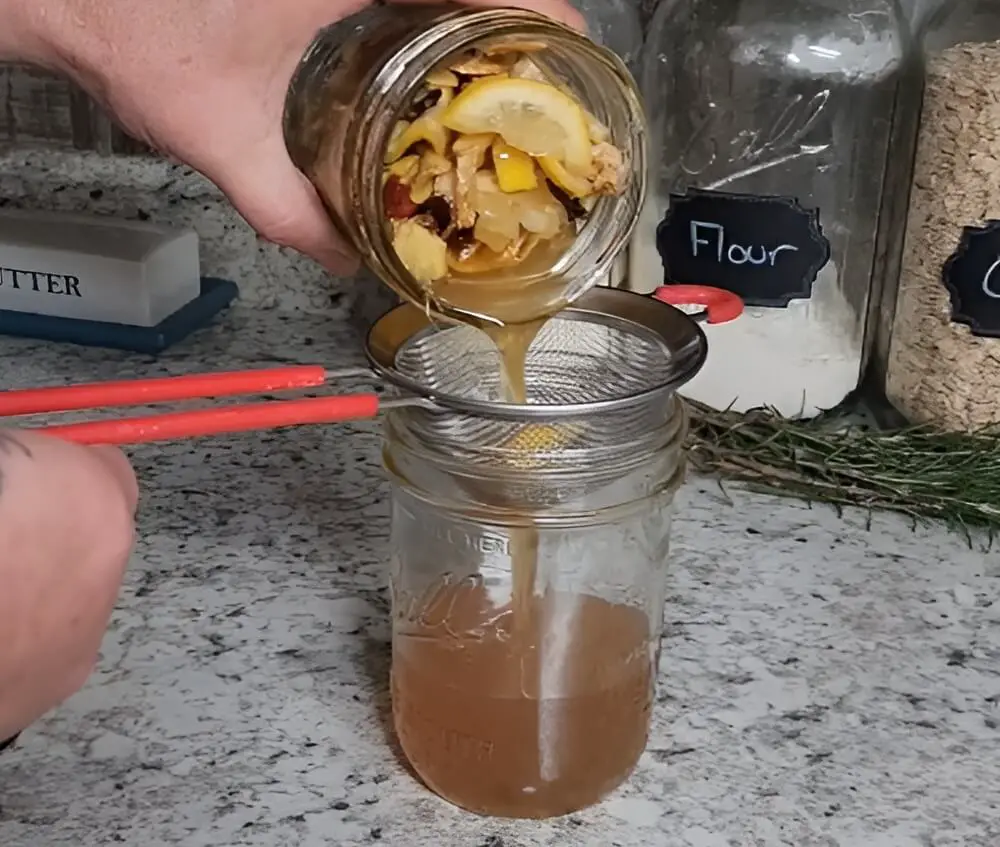
After fermenting, pour the mixture through a strainer or cheesecloth into a clean bowl. Press the solids with a spoon to get every last drop of syrup.
Step 7: Store
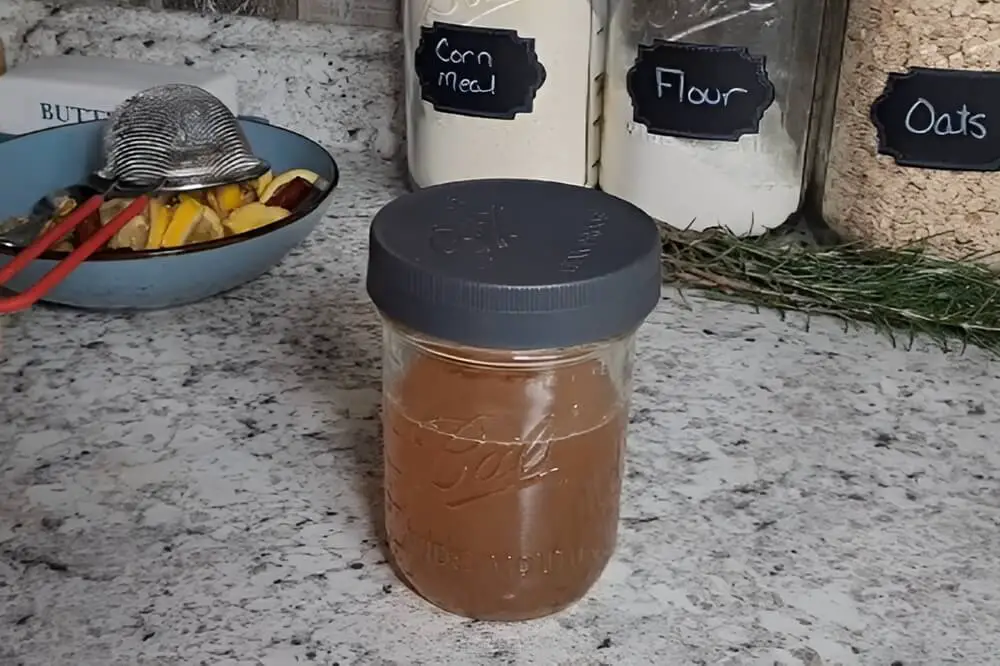
Pour the strained syrup back into a clean jar. Seal tightly and store in the refrigerator. It’ll keep for at least 1–2 months.
How to Use This Natural Cough Syrup
Take 1 tablespoon straight to soothe a sore throat.
OR
Stir 1–2 tablespoons into hot water to make a comforting herbal tea.
You can also take it daily as an immune booster during cold and flu season. This fermented lemon and honey cough syrup is a fast, effective, and all-natural way to treat coughs.
Like this post? Don't Forget to Pin It On Pinterest!
You May Also Like: