


Estimated reading time: 8 minutes
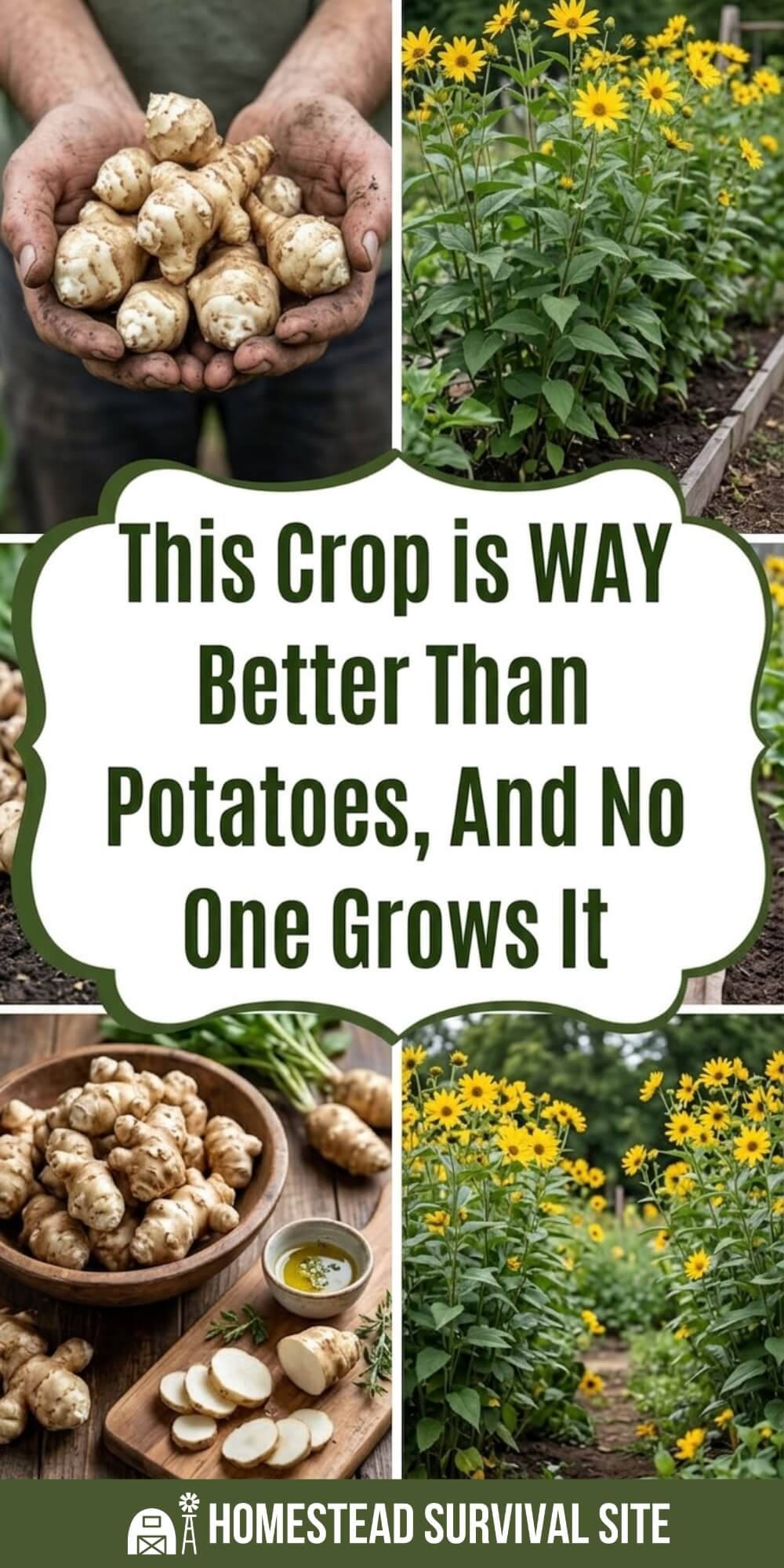
Imagine a vegetable that produces a ridiculous amount of food in a tiny patch of ground, shrugs off pests and diseases, and grows back year after year with almost no effort on your part. Now imagine you don’t even have to harvest it all at once or find a spot to store it, because it’ll happily wait in the ground all winter until you’re ready to dig some up for dinner.
On top of all that, it’s tasty, it’s good for your gut, and it’ll reward you with tall stalks of cheerful yellow flowers that the bees absolutely love. It’ll grow in poor soil, it handles cold winters like a champ, and it’s often called one of the best crops you could grow if things ever really fell apart. So why isn’t everyone growing it?
The plant I’m talking about is the Jerusalem artichoke, also known as the sunchoke. I recently came across a great video about it on the YouTube channel, GrowVeg, and they make a really good case for growing this crop, maybe even instead of potatoes. Below you can watch their video and read a summary of what they covered.
Want to save this post for later? Click Here to Pin It On Pinterest!
Why Jerusalem Artichokes Are Worth Growing
They’re Incredibly Productive
The biggest selling point of Jerusalem artichokes is just how much food they produce. In the video, he digs up a single bed planted from about 10 small tubers the year before. That bed held roughly 10 to 12 plants in a space only about 3 feet by 3 feet, and it produced over 20 pounds of tubers.
When it comes to yield for the amount of space they take up, Jerusalem artichokes are right up there with the most productive plants you can grow. It’s easy to see why so many people call them the ideal crop for an apocalypse.
They Store Themselves in the Ground
Unlike potatoes, Jerusalem artichokes don’t need to be dug up all at once and stored somewhere cool and dark. The tubers can stay right where they are all winter long, and you can just dig up what you need when you need it.
The one exception is if your ground freezes solid in winter. In that case, dig them up before the hard freeze and store them in boxes of damp sand or potting mix.
They’re Tough as Nails
Jerusalem artichokes grow well anywhere from zone 3 to zone 9, so they can handle a wide range of climates. They rarely suffer from diseases like blight, and they don’t attract many pests either. You won’t be fighting off potato beetles, for example.
They Keep Coming Back
Once you’ve got a patch established, you can keep it producing in the same spot year after year just by replanting some of the tubers you harvest. That makes them act a lot like a perennial crop, giving you food every year with very little work.
A Little Background on Sunchokes
Despite the name, Jerusalem artichokes don’t come from Jerusalem, and they aren’t related to globe artichokes (which are actually a type of thistle). They’re much more closely related to sunflowers, which makes sense when you see how tall they grow and how much their bright yellow flowers resemble sunflowers. That’s likely where the name “sunchoke” comes from.
The “Jerusalem” part is probably a mix-up of the Italian word for sunflower, girasole, which means “turning to the sun.” The “artichoke” part likely comes from the fact that they taste a lot like globe artichokes.
The tubers themselves are knobbly and humble-looking, but they’re very nutritious. They have a slightly sweet, slightly nutty flavor with a rich, savory depth to it.
Choosing a Spot
Jerusalem artichokes will grow in partial shade, but you’ll get more tubers if you plant them in full sun. The patch in the video grew in a somewhat shady spot surrounded by shrubs and still produced a great harvest.
Keep in mind that these plants can reach 10 feet tall or more. The host found that his plants grew so tall they flopped over onto his other crops, so he decided to move them. For that reason, it’s a good idea to give them their own dedicated bed away from your other vegetables, or even grow them in a large container to keep them contained.
They’ll grow just fine in poor soil, but if you can improve it, you’ll get even more tubers. In the video, the host worked a couple of wheelbarrow loads of well-rotted manure into the new bed, which had relatively well-drained soil.
How to Plant Jerusalem Artichokes
Plant them toward the end of winter. Here’s how the host did it:
- Choose good tubers. Pick out smooth tubers with plenty of buds on them.
- Space them out. Lay them about 18 inches apart in every direction. You can go a little closer, or spread them out to about 2 feet apart if you have a large area to fill.
- Plant them. Dig a hole about 6 inches deep for each tuber, drop it in, and cover it with soil.
If your soil is especially sandy and drains fast, toss a handful of compost into the bottom of each hole, along with a sprinkle of something like chicken manure pellets. If your soil is already rich, you can skip this step.
Caring for Your Plants
Once they’re in the ground, Jerusalem artichokes need very little attention. The foliage is sensitive to frost, but the plants come up on their own schedule, so there’s not much risk of them getting hit by a late cold snap.
They start off slowly, but once they get going, they shoot up incredibly fast. According to the host, they grow even faster than corn.
As they take off, you can spread a mulch of organic matter like grass clippings around the young shoots. If your soil drains quickly and tends to dry out, make sure to water them so they can keep up that rapid growth.
The host likes to plant nasturtiums at the base of his Jerusalem artichokes as a living mulch. Nasturtiums have shallow roots, so they don’t compete with the artichokes, and they add a nice splash of color along with edible, peppery leaves.
Other Perks of Growing Them
- They make a great screen. Since they grow so tall, they work well as a temporary privacy screen or a windbreak for more delicate plants.
- The flowers are beautiful. They bloom heavily in late summer, making them a decorative plant in their own right.
- Bees love them. Like sunflowers, the blooms are excellent for pollinators.
- You can cut the flowers. Bringing them inside for a bouquet won’t hurt the tubers growing underground.
Harvesting
Toward the end of the season, the foliage will start to die back. When that happens, cut the stems down close to the ground, but leave a small stump so you can find the plants later. Then just dig up the tubers whenever you need them.
The One Downside (And How to Deal With It)
There’s probably one big reason Jerusalem artichokes aren’t more popular: they can make some people a bit gassy. In fact, they’ve earned the unfortunate nickname “fartichokes.”
This comes from a type of fiber in the tubers called inulin. While it can cause some wind, it’s actually great for your gut bacteria and can improve your digestive health. So even with the side effect, they’re very good for you.
There are a couple of ways to reduce the problem. First, try harvesting the tubers after several hard frosts, which can help lessen the effect. Second, try fermenting them, which cuts it down even further.
How to Eat Jerusalem Artichokes
There are lots of ways to enjoy them:
- Roasted: One of the host’s favorite ways to eat them.
- In soups: His absolute favorite, since they add a rich, deep flavor when blended into soup.
- Raw: Grate or cube them and toss them into salads.
- Fermented: A great option if you want to reduce their gassy side effects.
How to Ferment Jerusalem Artichokes
The host showed a simple ferment that’s similar to kimchi or sauerkraut:
- Scrub the tubers clean and slice them fairly thin.
- Mix the slices with some chopped green onion, garlic, ginger, salt, and chili flakes if you like a little heat.
- Pack the mixture into a jar and press it down so it’s nice and compact.
- Add just enough water to cover everything.
- Set the jar indoors at room temperature somewhere dark so it can ferment.
- “Burp” the jar every so often by opening it to release built-up gas so it doesn’t burst.
- Once you stop seeing bubbles along the sides of the jar, fermentation has slowed down and you can move it to the fridge.
Stored in the fridge, it should keep for at least a couple of months.
Final Thoughts
If you’re looking for a crop that’s easy to grow, produces a huge harvest in a small space, and keeps coming back year after year, Jerusalem artichokes are hard to beat. They don’t need special storage, they rarely have pest or disease problems, and they give you beautiful flowers as a bonus. Potatoes may get all the attention, but sunchokes might just deserve a spot in your garden too.
Like this post? Don't Forget to Pin It On Pinterest!
You May Also Like: