


Estimated reading time: 6 minutes
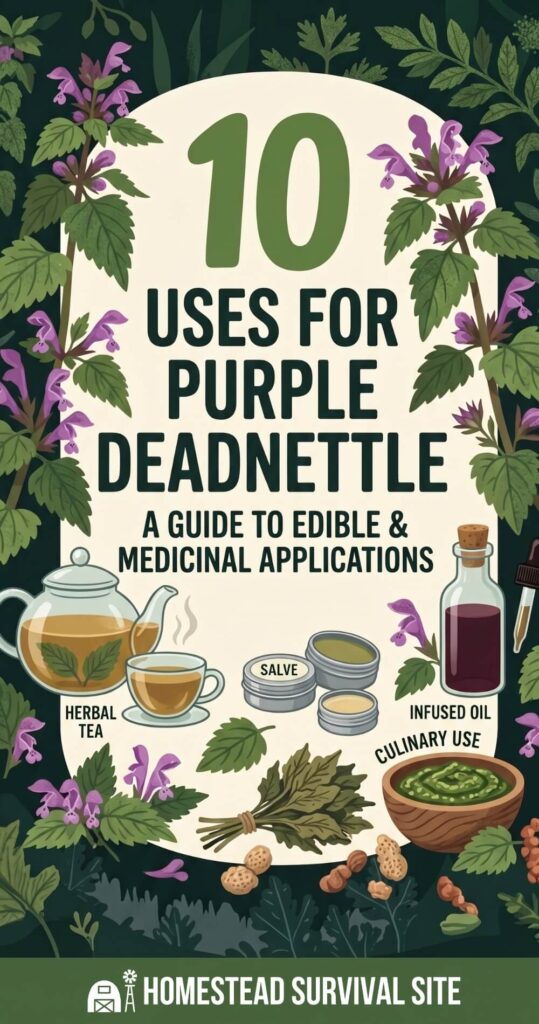
If you've ever noticed a low-growing plant with small purple flowers and heart-shaped leaves taking over the edges of your garden or yard, there's a good chance you've been walking right past one of nature's most useful wild herbs. Purple deadnettle (Lamium purpureum) is a common wild plant that most people either don't recognize or dismiss as a weed, but it's far more valuable than it looks.
Despite sharing part of its name with stinging nettle, purple deadnettle won't hurt you. It belongs to the mint family, and you can tell by its distinctive square stem. The leaves are heart-shaped and arranged in alternating pairs along the stem, and toward the top of the plant, the leaves themselves take on a purple hue alongside the pink, white, or purple flowers.
It grows just about everywhere, but especially along the edges of gardens, fields, and forests, preferring sunny spots with loose soil. Like mint, it spreads aggressively through both its root system and seeds, but since it grows wild in abundance, there's no need to cultivate it. Just go find it.
Want to save this post for later? Click Here to Pin It On Pinterest!
Purple deadnettle is edible, medicinal, and easy to identify with no toxic lookalikes to worry about, making it one of the more beginner-friendly wild plants to learn. From supporting iron levels to stopping bleeding in a pinch, it has a surprising number of uses.
In this video from Luli's Homestead, she explains how to harvest, prepare, and preserve this remarkable plant, along with ten ways to use it. You can watch the video and read the list of uses below.
1. Eat It Fresh
Purple deadnettle is entirely edible and has a mild, pleasant flavor that makes it easy to incorporate into everyday meals. The leaves and flower tops can be eaten straight off the plant, tossed into a salad, blended into a smoothie, or mixed with other greens in dishes like quiche.
Historically, wild plants like deadnettle and stinging nettle were harvested in early spring by people whose winter food stores were running low, making them a genuine survival food with a long track record.
2. Boost Iron and Vitamin C Intake
Purple deadnettle is notably high in both iron and vitamin C, which is a powerful combination since vitamin C enhances the body's ability to absorb iron. For anyone dealing with iron-deficiency anemia, drinking deadnettle tea can help restore those levels over time. It also contains magnesium, zinc, and essential oils, making it a nutritionally well-rounded wild green.
3. Stop Bleeding
One of deadnettle's most well-known practical uses is as a styptic, a substance that helps stop bleeding. In a pinch, you can crush or chew fresh leaves into a poultice and apply it directly to a cut or wound to help slow and stop bleeding.
It works similarly to other well-known styptic herbs like yarrow and plantain. This is exactly the kind of skill that could come in handy when you're far from a first aid kit.
4. Soothe Stings and Inflammation
Applied topically, purple deadnettle has anti-inflammatory properties that make it useful for calming insect stings and bites. All you have to do is crush the plant and apply it directly to the sting site, and by the following day the pain and swelling will have gone down significantly.
5. Fight Fungal Infections
Purple deadnettle has antifungal properties that make it useful both topically and internally. Applied as a poultice or infusion to the skin, it can help address minor fungal issues. This is one of the lesser-known properties of the plant but adds to its overall value as a multi-purpose medicinal herb worth keeping on hand in dried or tincture form.
6. Ease Menstrual Cramps and Heavy Bleeding
For women dealing with difficult PMS symptoms, purple deadnettle offers a combination of properties that can help. Its anti-inflammatory action can calm cramping and reduce associated discomfort, while its styptic properties may help moderate heavy bleeding.
It's a traditional remedy that has been used for menstrual support for generations, though as with any herb, it's worth consulting a healthcare provider before using it medicinally, particularly for anyone already taking blood-thinning medications like aspirin or warfarin, as deadnettle can counteract their effects.
7. Relieve Congestion and Support Respiratory Health
Purple deadnettle has a purgative, expectorant quality that helps thin out mucus secretions and make them easier to cough up. This makes it particularly helpful for people dealing with bronchitis, chest congestion, or asthma. It's often included in herbal tea blends specifically formulated to support respiratory health during cold and flu season.
8. Reduce Fever and Warm the Body
Deadnettle is classified as a diaphoretic herb, meaning it promotes sweating. This makes it a traditional remedy for fevers and winter chills. Drinking it as a tea helps warm the body from the inside and encourages the sweating that helps break a fever. For this reason, it's commonly added to herbal formulas designed to address colds, flu, and fevers rather than used alone.
9. Support Kidney and Urinary Health
Purple deadnettle also acts as a diuretic, stimulating urine production and helping flush the urinary tract. This makes it potentially useful for people dealing with UTIs, kidney stones, or other renal issues where increased urination is beneficial. As with any diuretic herb, you'll want to talk to a healthcare provider when addressing a specific medical condition.
10. Preserve It as a Tincture or Dried Herb
One of the best things about purple deadnettle is how easy it is to preserve for year-round use. The simplest method is dehydrating the tops and leaves on the lowest setting in a food dehydrator until fully dry and crisp, then storing them in a labeled airtight container for use in teas and herbal infusions throughout the winter.
The second method is making a tincture: pack 1 oz of fresh chopped plant material into a glass jar, cover with 2 oz of 100-proof vodka, seal and label it, shake daily for the first week or two, and let it sit in a dark cupboard for 6 to 8 weeks before straining into a dark amber dropper bottle.
Because tinctures made with 100-proof vodka are highly concentrated and alcohol-preserved, they can remain effective for years.
Like this post? Don't Forget to Pin It On Pinterest!
You May Also Like:



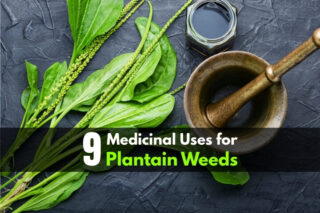




When I moved to Tennessee fourteen years ago, the two most useful herbs I found in abundance just off our back porch were plantain, both broad- and narrow-leaf varieties, and purple deadnettle.
I quickly learned that purple desdnettle makes an absolutely delicious pesto, especially when combined with some of our abundant wild garlic leaves, and really good olive oil.
I also use it tinctured, and as herbal tea, but it really shines as pesto, especially in early spring, before much else is actively growing.