

Estimated reading time: 9 minutes
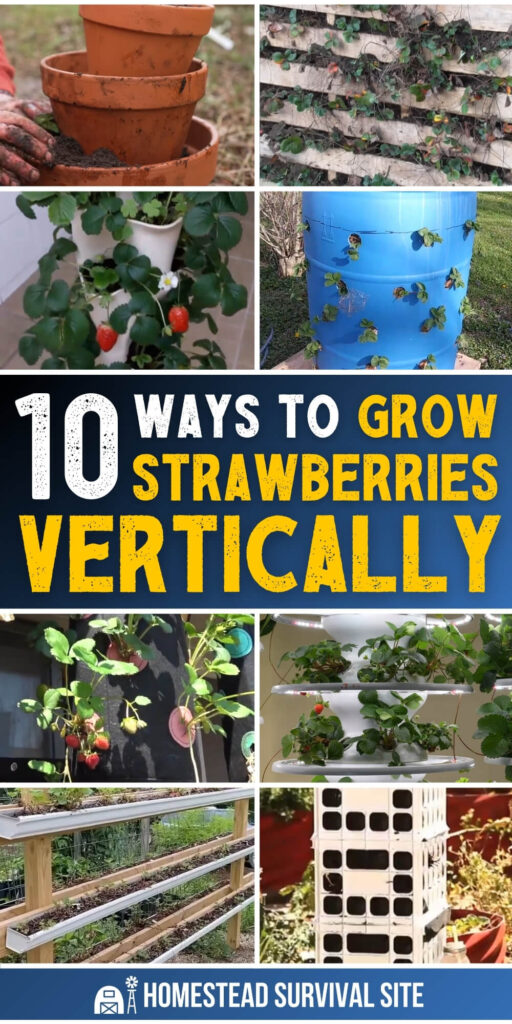
Strawberries are one of the most rewarding fruits you can grow at home, but they can also take up a lot of ground space if you let them spread out the traditional way. Vertical growing solves that problem by stacking your plants upward instead of outward, letting you fit a surprising number of strawberries onto a patio, balcony, fence line, or even an indoor shelf.
The methods range from quick weekend DIY projects using materials you might already have like pallets, PVC pipe, or stacked crates. Or you can build your own tower systems designed to maximize yield with minimal effort. Whether you have a sprawling backyard or just a few square feet of outdoor space, there's a vertical strawberry setup on this list that will work for you.
Each method has its own strengths, and the best one depends on your budget, your space, and how much time you want to spend on setup and maintenance. Read through the options below and find the approach that fits your situation, then get ready for more homegrown strawberries than you'll know what to do with.
Want to save this post for later? Click Here to Pin It On Pinterest!
1. Barrel Tower
A wooden barrel planter is one of the most classic and attractive ways to grow strawberries vertically. Holes are drilled into the sides of the barrel, typically around an inch to an inch and a half in diameter, and a strawberry plant is tucked into each opening, with additional plants along the top. A single barrel can hold a surprisingly large number of plants, with some gardeners fitting 50 or more around the sides plus a few on top.
One useful upgrade is running a central tube down the middle of the barrel filled with worm castings or compost materials. This vermicomposting column allows nutrients to distribute directly into the root zone as organic matter breaks down, giving the plants a steady, natural fertilizer source. When planting, it helps to angle the crowns slightly upward and position them higher than you think necessary, since the soil will compress and settle over time.
2. Hanging Grow Bags
Hanging planters originally designed for tomatoes work surprisingly well for strawberries, and they're easy to find online or at garden centers. Bare root strawberry plants are threaded through the bottom opening of the pot, and the whole thing is hung up to let the plants grow and trail downward. It's a compact, space-saving setup that works well on a porch, pergola, or anywhere you can get a sturdy hook.
The biggest challenge with this method is keeping up with watering, since hanging containers dry out faster than in-ground or raised bed planting. In warmer climates especially, the heat of summer can stress the plants quickly if hydration slips. Positioning the planter where it gets some afternoon shade can help moderate the temperature and moisture loss, and gives the plants a better shot at flowering and fruiting through the season.
3. Gutter Wall
A vertical rain gutter system is an appealing way to grow strawberries when horizontal space is tight. Vinyl gutters are mounted in a staggered, stairstep pattern on a wall or fence, filled with soil, and planted with strawberries along the length of each run. The setup can pack a lot of plants into a small footprint and looks tidy and organized once the plants fill in.
That said, gutters come with some real trade-offs worth knowing going in. The shallow soil volume dries out fast, so plan on watering every day or two, and seriously consider setting up a drip or automatic irrigation system from the start. The soil temperature is also harder to regulate than an in-ground bed, running too hot in summer and too cold in winter, which stresses the plants.
4. Hydroponic Tower
A vertical hydroponic tower lets you grow strawberries indoors year-round without any soil. Plants are set into the tower's openings and fed through a recirculating nutrient solution, with the system automatically cycling water to the roots on a timed schedule. Because there's no outdoor season to work around, you can start bare root plants, let them establish, and begin harvesting within a couple of months.
Growing strawberries hydroponically does require more hands-on management than most outdoor methods. Nutrient levels and pH need regular monitoring, and the watering cycle has to be dialed in carefully. Too little and the plants dry out, too much and the roots can rot. Pollination is another consideration indoors since there are no bees, so growers often use a small vibrating tool to manually pollinate each bloom.
5. Pallet Planter
A vertical pallet garden is one of the most budget-friendly ways to grow strawberries vertically, and it's a great way to repurpose a material that's often available for free. The basic idea is simple: stand a wooden pallet upright, staple or nail a backing material across the rear to hold the soil in, fill the gaps between the slats with soil, and plant directly into the openings. Old trampoline mat works well as a backing, but landscape fabric, burlap, or even heavy plastic sheeting all do the job.
Before planting, it's worth taking a few minutes to clean and lightly sand the pallet to remove any rough edges or splinters. It's also a good idea to check that the pallet hasn't been treated with harmful chemicals. Look for the HT stamp (heat treated) rather than MB (methyl bromide) when selecting one. Once it's planted and standing upright, the pallet takes up very little ground space while providing a surprisingly generous growing surface for strawberries, herbs, or flowers.
6. PVC Pipe Tower
A PVC pipe tower is an inexpensive and compact way to grow a surprisingly large number of strawberry plants in a very small footprint. The basic build uses a large-diameter PVC pipe, around 150mm, with openings cut or heated into the sides at evenly spaced intervals to serve as individual planting pockets. A smaller inner tube runs down the center to handle irrigation, with small holes drilled along its length to distribute water evenly throughout the soil column. A one-meter-tall tower built this way can hold up to 21 strawberry plants.
Assembly involves capping the bottom of the main pipe with drainage holes, then filling the tube in stages with a rich, nutrient-dense growing substrate as each row of plants is set in place. A small bent wire staple can be used to anchor each young plant against the opening while the roots establish themselves in the soil. Once complete, watering is simple: just pour water into the top of the central irrigation tube and it distributes downward through the column.
7. Shoe Organizer
A fabric shoe organizer is one of the most creative and low-cost ways to grow strawberries vertically. The organizer, the kind designed to hang over a door or on a wall, gets mounted in a sunny spot, with each individual pocket filled with soil and planted with a single strawberry runner. A standard organizer can hold two dozen or more plants in a very small wall footprint, making it a great option for small patios, balconies, or fence lines.
When planting, it helps to trim off any extra leaves from the runners so the plant's energy goes toward root development rather than foliage. If runners arrive before the planter is ready, they can be wrapped in damp newspaper and stored in the refrigerator, not the freezer, to keep them fresh until planting day. Position the organizer where it will receive as much direct sunlight as possible throughout the day, since the shallow pockets warm up and dry out faster than deeper containers.
8. Stacked Crates
A stacked milk crate tower is one of the quickest and most affordable vertical strawberry setups you can build, coming together for under $20. The crates, which interlock and stack securely on top of each other, are lined with landscape fabric to hold the soil in place, filled with potting mix, and then planted with strawberries both along the sides and across the top. You can go as few as two crates high or stack them five or more depending on your space.
Planting is straightforward: cut small slits in the landscape fabric along the sides of each crate and tuck a strawberry plant into each opening with the crown at soil level and the roots pointing downward. Angling the plants slightly outward encourages them to spill over the sides as they grow. A tomato fertilizer mixed into the potting soil at planting time gives the strawberries a nutrient boost, and watering from the top will naturally filter down through all the levels.
9. Stacked Pots
A simple and budget-friendly way to grow strawberries vertically is to nest three pots of progressively smaller sizes inside each other, creating a cascading tiered effect. Start by half-filling the largest pot with potting mix, then set the medium pot down into the center, half-fill that one, and repeat with the smallest pot on top. A bamboo cane pushed through the drainage holes helps keep everything centered and stable while you fill and plant. The result is a three-tiered strawberry planter that looks great on a patio or deck and can be put together with containers you may already have on hand.
Plant three strawberries in the bottom tier, two in the middle, and one at the top, with each crown sitting just at or slightly above the soil surface. Use a light, all-purpose potting mix rather than heavy garden soil, and consider mixing in a slow-release fertilizer to help the plants establish. The concept works with any containers that graduate in size, as long as each one has drainage holes in the bottom.
10. Tower Planters
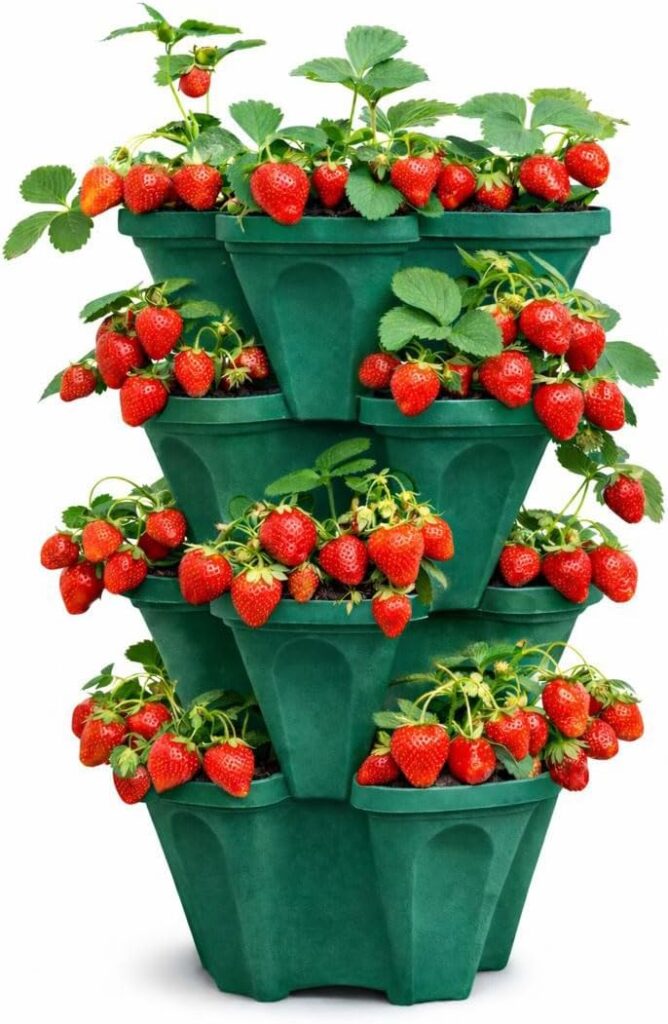
A stackable vertical planter tower is a purpose-built solution designed specifically for growing strawberries in tight spaces. These towers typically come in four stackable tiers with a total of 28 individual planting sites, packing a serious number of plants into a compact footprint that works equally well indoors or outdoors. Each tier snaps onto the next, so the tower is easy to assemble and can be taken apart just as quickly for cleaning or winter storage.
Because all 28 pockets are exposed on the outside of the tower, every plant gets good light and air circulation, and the berries hang freely where they're easy to spot and harvest. Watering from the top allows moisture to filter down through the tiers, though it's worth checking the lower pockets during hot weather to make sure they're staying adequately moist. This type of planter is a great option for balconies, patios, or anywhere space is at a premium but the goal is maximum strawberry output.
Like this post? Don't Forget to Pin It On Pinterest!
You May Also Like: