

Estimated reading time: 8 minutes
Making your own dish soap is an easy way to eliminate or minimize chemicals from your home. Almost all commercial dish soap has some level of toxic ingredients. Common offenders in commercial dish soaps include sodium lauryl sulfate (SLS), a foaming agent linked to skin irritation; triclosan, an antibacterial chemical that disrupts hormones and contributes to antibiotic resistance; and artificial fragrances, which are a catch-all term that can hide dozens of chemical compounds.
This fact alone should make us all pause and reevaluate what we are using to clean our hands and dishes. Fortunately, making your own dish soap that has all natural ingredients is a simple project that you can include the kids on. In my house, the more my kids are involved the more ownership they take in what they are doing. Making the soap has made them want to help with the dishes!
Want to save this post for later? Click Here to Pin It On Pinterest!
What to use?
There are many recipes out there that use a variety of ingredients. I have kept mine simple for a few reasons, primarily to keep it clean and environmentally friendly.
Many dish soap recipes use borax. I prefer to omit borax even though it is a naturally occurring mineral. Because I am using this soap with kids, it was important for me to weigh the risk.
Borax can cause skin, eye, and lung irritation. If ingested it can shock your body, and cause digestive issues and even death. 5 grams of borax is all it takes to pose a fatality risk for a child, if ingested. If you come across a recipe that uses borax and prefer to omit it entirely, washing soda (sodium carbonate) is a safer alternative for boosting cleaning power.
I also do not add vinegar to this dish soap. Vinegar, or other acids like lemon juice, are great at cutting grease from dishes. However, the combination of the acid and soap fight each other and can nullify their cleaning super-powers. The vinegar essentially strips the soap back to its original oil form and can leave behind a residue on dishes or make the soap seem clumpy.
Vinegar is a great cleaning agent, so instead of adding it to our soap, we mix half water and half vinegar cup as a sanitizing soak. For a pan with tough grease, I may start scrubbing with some vinegar, rinse and switch back to my dish soap. I have found that keeping the ingredients separate, I have had better luck with both being successful.
If you have hard water, you may see some white reside after using castile soap. This is from the salts and minerals within the water. This happens because commercial soaps have chelating ingredients that bind to minerals to help them rinse off.
Castile soap is clean of those ingredients, so you may want to use vinegar instead. Vinegar can have the same effect to help break down the salts and rinse away the residue. To use a light vinegar rinse in places of water build-up, you can add 1 cup of white vinegar to 1 quart of water to a spray bottle. Vinegar also has some disinfecting properties.
How to Make A Simple Dish Soap
This recipe makes about 3.5 cups of liquid dish soap.
Supplies needed:
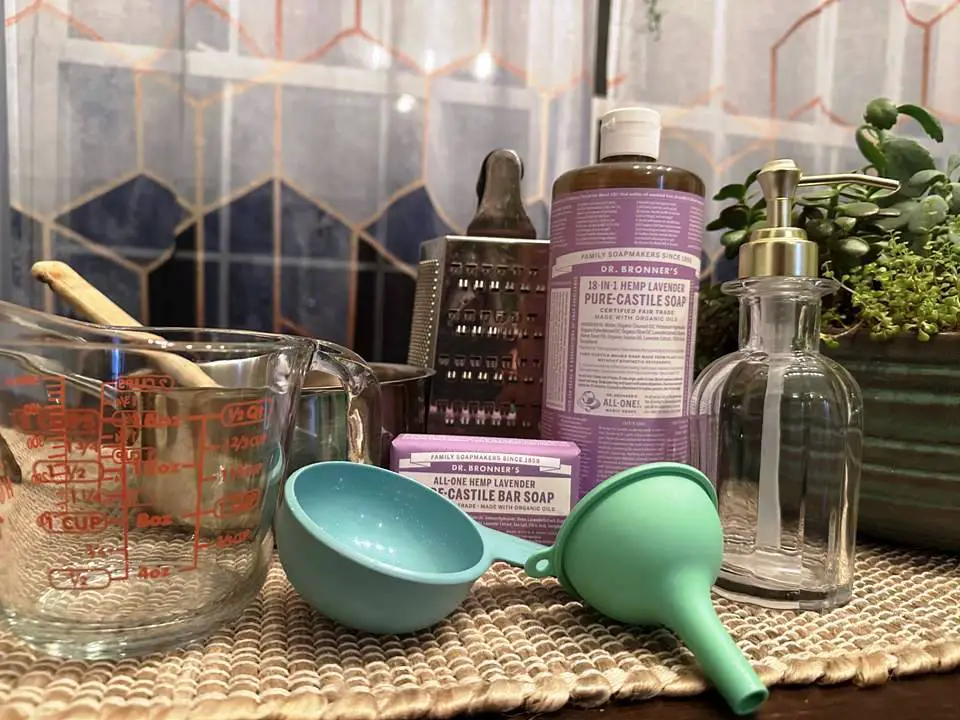
- Castile bar soap
- Castile liquid soap
- Essential oils, if desired
- Reusable soap bottle
- Funnel for ease
- Measuring cups
- Grater
- Saucepan
- Wooden spoon
- Vinegar for rinse agent
Instructions:
1. First, grate your bar of castile soap. Start with half. I like to use a fragranced castile soap to use less essential oil but depending on the scent you would prefer you can choose unscented. Make sure you are using a trusted brand because some fragrances can carry hidden ingredients.
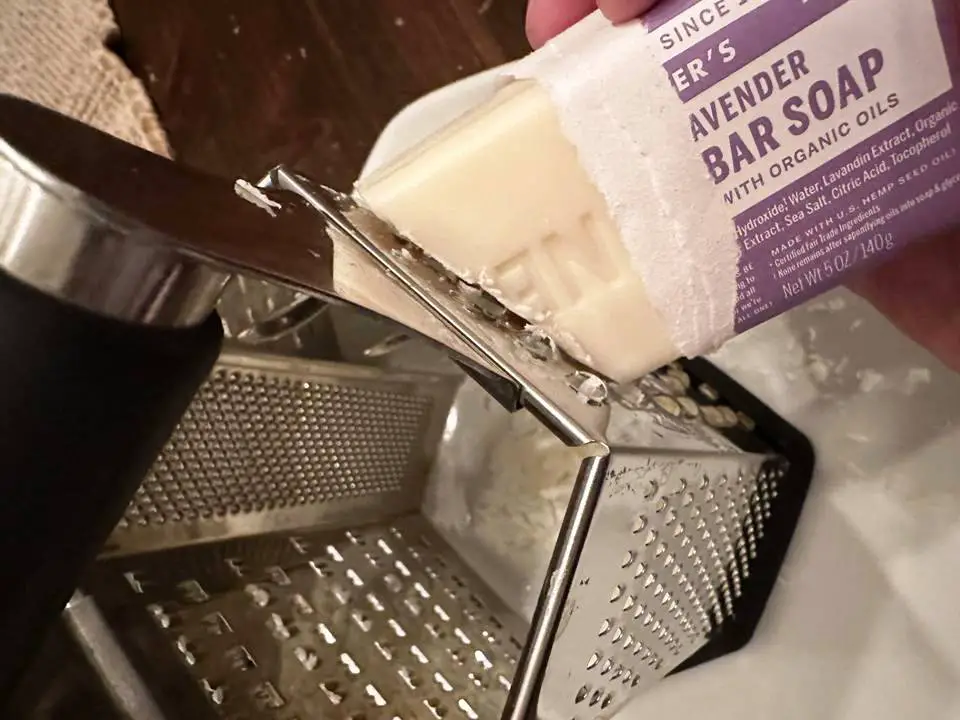
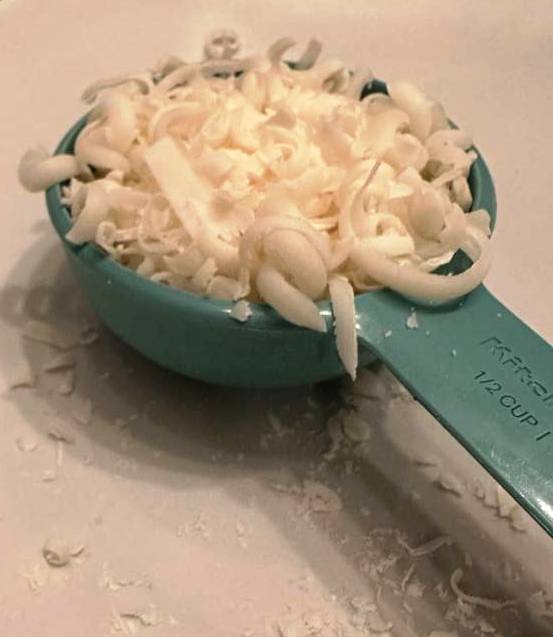
2. Once you have grated your soap, pack tightly into a ½ cup measuring cup. You may need to grate a bit more.
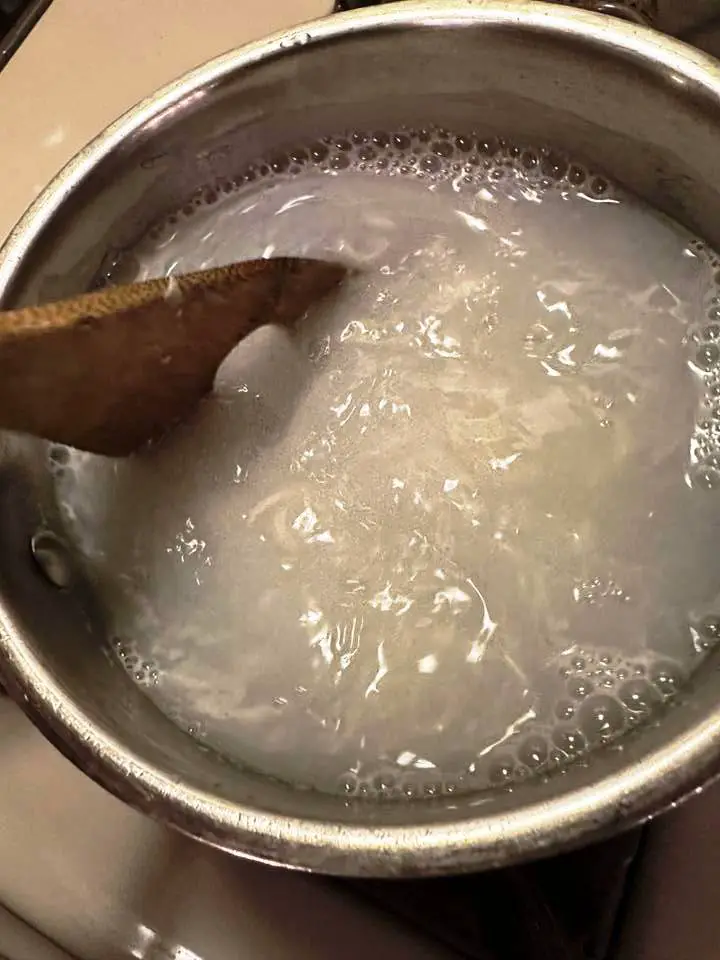
3. Add 3 cups of water and your ½ cup of grated soap to a saucepan and turn your heat to a medium-low position.
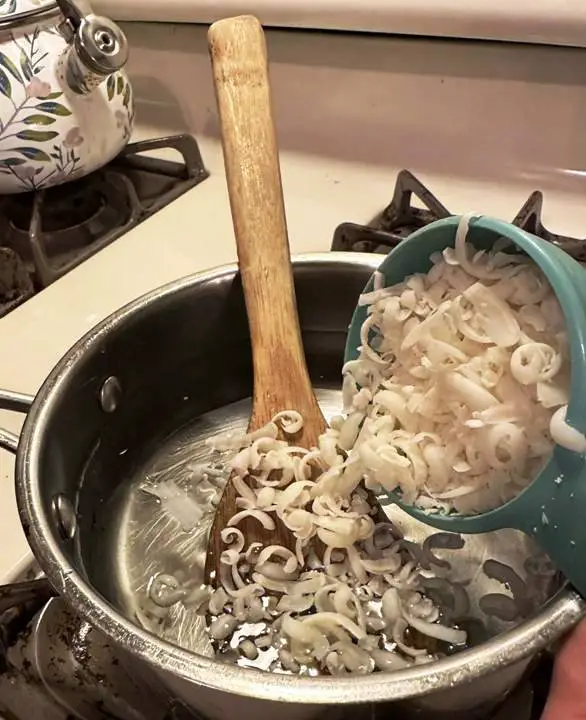
4. Allow the soap to slowly melt, it will take about 10 minutes. Stirring gently helps the process a bit faster.
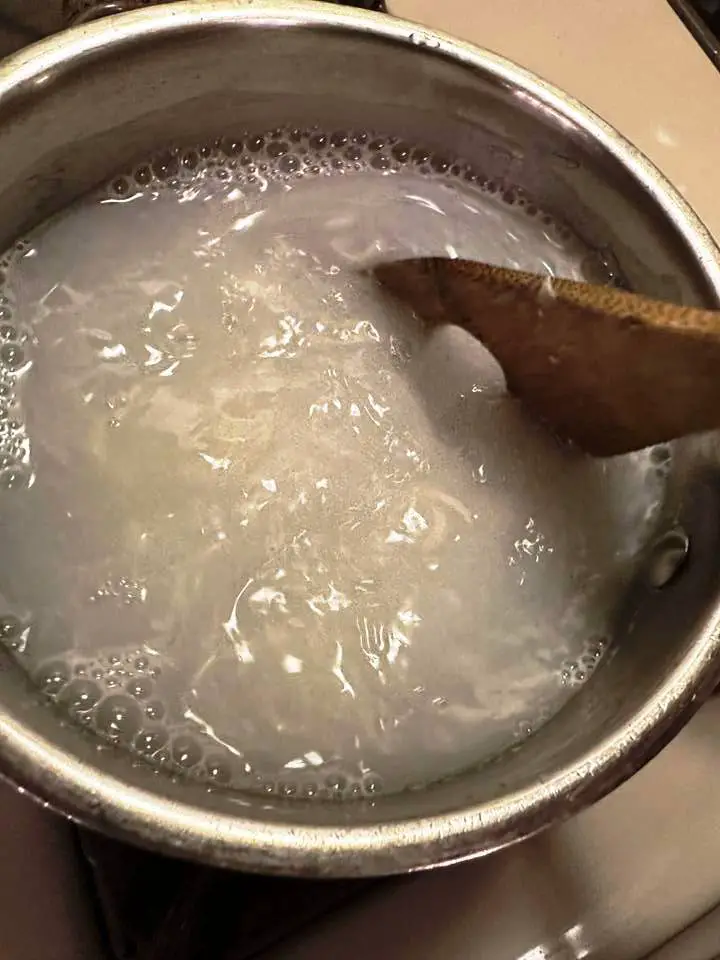
5. Turn off the heat but before the mixture cools down, pour ½ cup of liquid castile soap into the mixture, and stir well to combine.
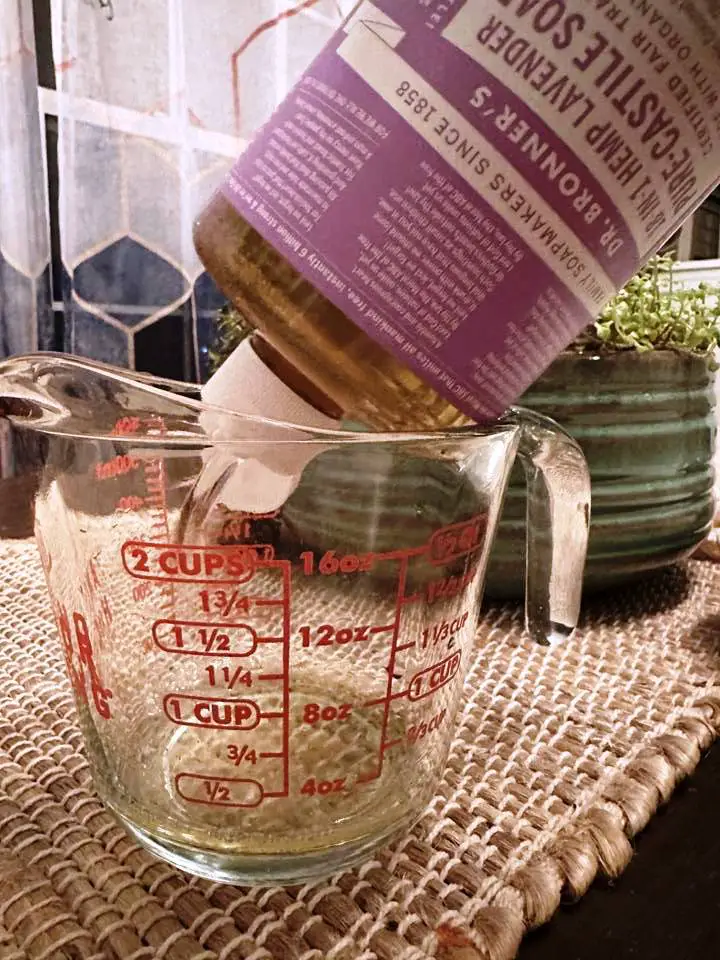
6. Now you can let your soap cool down completely. As it begins to cool, I stir in about 20 drops of essential oil. Since I used fragranced soap this time, I did not add anything additional.
For dish soap, the best essential oils are those with natural degreasing or antibacterial properties. Lemon and orange are popular choices because their citrus compounds help cut grease. Tea tree oil has strong antibacterial properties and works well for cutting boards and anything that's touched raw meat. Lavender is a mild option if you're sensitive to strong scents.
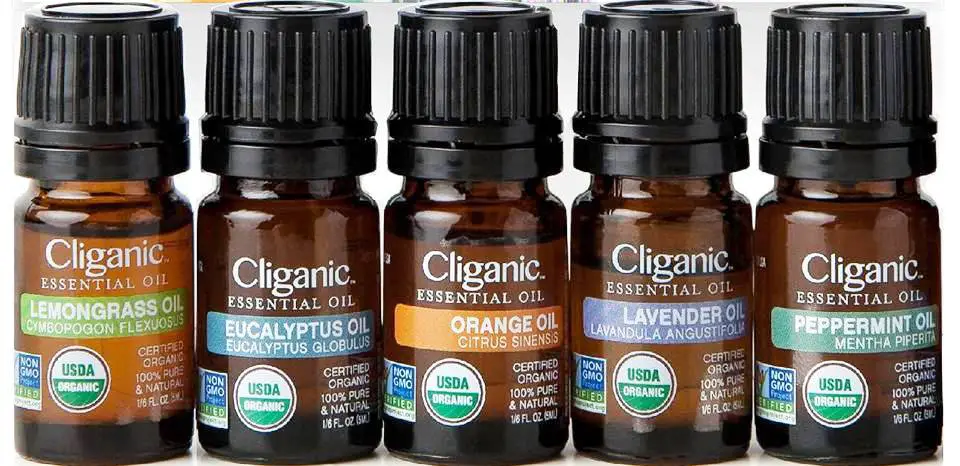
7. Once your soap is completely cool, give it a final stir.
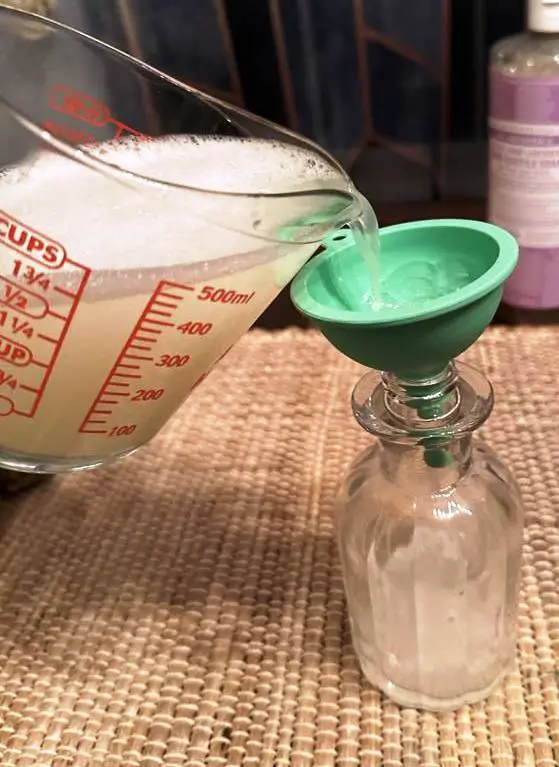
8. Then use a funnel to pour into your reusable or recycled soap dispenser. I like to pour the mixture back into a liquid measuring cup for easy pouring.
9. If you ever feel your new dish soap is getting thicker than you would like swirl in a bit of warm or hot water to help reach the consistency you prefer. Without vinegar this may naturally happen, but it should be able to thin back down with ease.
Storage and shelf life: Store your dish soap in a sealed dispenser at room temperature, away from direct sunlight. Because this recipe contains no synthetic preservatives, it is best used within 4–6 weeks.
If you notice any separation, simply shake or swirl gently before use. If the soap develops an off smell or visible mold, discard and make a fresh batch. Making smaller batches more frequently is a good way to keep it fresh.
Why Castile Soap?
Castile soap originates back to Castile, Spain between 1500-1600 and was first made with olive oil. Commercially, it can now include many different plant oils in its composition, but it remains a synthetic-free, animal-free, and non-toxic ingredient. Castile soap is a green base to utilize in cleaning your dishes, and many other areas of your home and family!
The natural oils help this soap cleanse, moisturize, and lather for a variety of purposes. Gentle enough for face and body, this soap can be used in recipes for face wash, body wash, shampoo, pet wash, baby wash, and even fruit and veggie wash.
There are also castile soap centered recipes for dish soaps, detergents, laundry soap, window cleaner, all-purpose cleaner, and even sprays for ants. Purchasing a large bottle of liquid castile soap may seem expensive until you realize all that you can accomplish with one green soap.
Can I Use This in the Dishwasher?
This recipe is designed for hand washing only and should not be used in an automatic dishwasher. Liquid dish soap produces significantly more suds than dishwasher detergent, and the excess foam can overflow, damage the pump, and leave a soapy residue throughout the machine's interior, which is as unpleasant to clean as it sounds.
If you're interested in a machine-safe homemade option, look for recipes specifically designed for dishwashers, which typically use washing soda, citric acid, and a rinse aid rather than castile soap.
Like this post? Don't Forget to Pin It On Pinterest!
You May Also Like: