

Estimated reading time: 5 minutes
During a long-term disaster, one of the first things to go is the power, and with it goes your refrigerator and freezer. If the grid stays down for days or weeks, everything you have chilled or frozen will slowly spoil, and there's nothing more discouraging than watching expensive food rot. That is exactly why knowing how to store fresh vegetables without electricity is so important.
The good news is that this isn't a new problem. People used to keep root vegetables fresh for months at a time before refrigerators existed, and they did it with nothing more than a cool, dark space and a little know-how. Root crops like potatoes, carrots, and parsnips are especially easy to store. Give them the right conditions and they'll keep for months with no power at all. The trick is understanding what those conditions are and setting them up correctly.
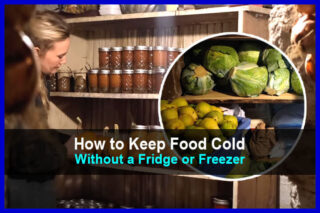
This is also the kind of skill you want to practice now rather than trying to figure it out during a long-term power outage. The YouTube channel, Frugal Lizzy Bee, does a great job of explaining these methods in her video. You can watch it and read about her methods below.
Want to save this post for later? Click Here to Pin It On Pinterest!
Step 1: Choose a Cool, Dark Storage Spot
The location matters more than anything else, and it comes down to three things: cool, dark, and dry.
Cool is important because heat encourages vegetables to spoil and sprout faster. An unheated room, a spot away from any radiator, or a cupboard along an exterior wall all work well. Frugal Lizzy Bee stores hers in a cool kitchen with no heating, along with a large cupboard that once held a water tank, which turns out to be excellent storage space.
Dark is just as important, especially for potatoes. As soon as light hits them, they start to turn green and sprout, which is exactly what you want to avoid. A closed cupboard, a pantry, or any enclosed space that stays dark is ideal.
Dry rounds out the list. Skip any spot that leaks or stays damp, since moisture leads to rot. A leaky garage will not work, and neither will a glass porch that stays bright all day, no matter how cool it gets. The goal is a space that is chilly, pitch dark, and free of dampness.
Step 2: Gather Your Materials
You don't need anything fancy for this. Sturdy cardboard boxes are the main container, and it helps to have a few different sizes so you can match the box to the amount of each vegetable. Keep in mind that a full box of potatoes gets heavy fast, so smaller boxes are easier to move and stack.
You'll also want some thick brown paper. Frugal Lizzy Bee uses heavy brown paper and even rips up plain paper shopping bags to do the job. The paper helps block light and separates the layers of vegetables. That is really all it takes to get started.
Step 3: Store Your Potatoes
Potatoes are the priority since they store the longest and feed you the most. Open your bags and place the potatoes into a box, both the small ones and the large ones together. A single box can hold quite a few. In the video, one box takes ten kilograms (about 22 pounds) of potatoes without a problem.
The most important part is keeping the light out. Lay some brown paper over the top of the potatoes, or tuck the box into a dark cupboard so no light can reach them. This is what stops them from turning green and sprouting. Another simple trick she uses is to set the bagged potatoes in a dark junk cupboard and cover them over with paper or old bags, which keeps them going for a long time.
Step 4: Pack Your Carrots and Parsnips
Carrots and parsnips can share a box. Lay the carrots in first, then tear up a piece of brown paper and lay it over the top. Add your parsnips on top of that paper layer. The paper keeps the layers separated and helps block light, just as it does with the potatoes. Once packed, this box goes into the same cool, dark cupboard.
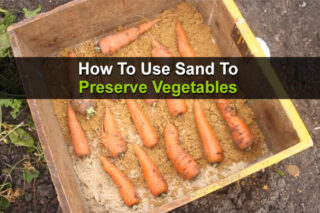
If you want your carrots to last even longer, there is a traditional method worth knowing. You can pack them in a box of damp sand or wood shavings, layering the carrots so they do not touch each other and covering them completely. The sand holds a little moisture and keeps the carrots from drying out and going limp, which can extend their storage life considerably.
Step 5: Check On Them Regularly
Storing your vegetables is not a set-it-and-forget-it task. Check on them every so often and pull out anything that is starting to soften, sprout, or go bad. Removing a spoiling vegetable early keeps it from affecting the ones around it.
When you spot vegetables that are on their way out, you do not have to waste them. If you have any freezer space or power at the time, you can chop them up and freeze them, or cook them into a meal to use them before they turn. Sorting through your stored produce this way helps you get the most out of every harvest and cuts down on waste.
Final Thoughts
Storing vegetables without a fridge or freezer really comes down to giving your root crops a cool, dark, dry home and keeping the light off them. Boxes, brown paper, and a quiet cupboard are all you need to keep potatoes, carrots, and parsnips fresh for weeks.
Set it up once, check on it now and then, and you'll have a working food storage system that keeps going even when the power doesn't.
Like this post? Don't Forget to Pin It On Pinterest!
You May Also Like: