


Estimated reading time: 6 minutes
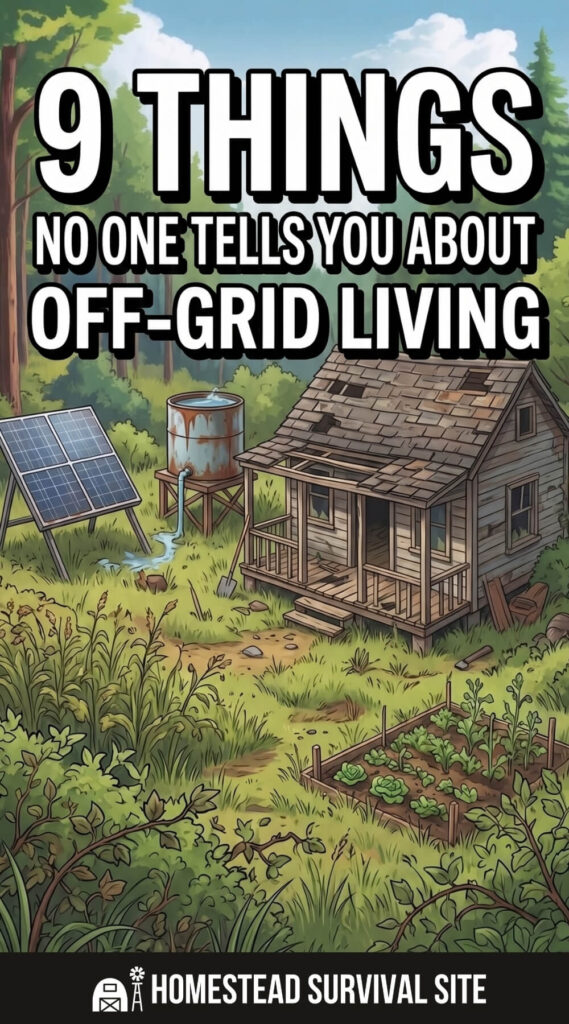
There's a version of off-grid living that exists in people's heads, and then there's the real thing. The version in people's heads looks like a sun-drenched homestead, a crackling fire, home-cooked meals from the garden, and a life finally free from the noise and stress of modern society.
You've probably seen it on TV. I'm talking about those spotless tiny homes, those perfectly organized root cellars, those couples laughing while they harvest vegetables. It almost looks too good to be true. And that's because it is.
The reality of off-grid living is messier, harder, more expensive, and more complicated than any feed or blog will ever show you. Projects take years instead of weekends. Things break at the worst possible time. Nature doesn't care about your schedule. And the sense of total freedom people expect only comes after a lot of sacrifice.
Savannah and Casey from the YouTube channel, Hey Wanderer, do an incredible job of explaining this. In one of their recent videos, they go over nine things people almost never talk about when it comes to off-grid life, and also show examples of the kinds of projects they're working on.
You can watch their video below, but I also typed up a brief summary of each point.
Want to save this post for later? Click Here to Pin It On Pinterest!
1. It's Not Necessarily Cheap — But It's Not Necessarily Expensive Either
Most people fall into one of two camps: they think off-grid living requires a ton of money, or they think they can do it on almost nothing. Neither is quite right. The truth is that off-grid living can cost less than a regular lifestyle, but how comfortable you are depends on how much you're willing to sacrifice.
More money means hiring help, building faster, and enjoying more conveniences right away. Less money means roughing it, possibly in a tent on a cheap piece of land with very basic amenities.
For Savannah and Casey, it took somewhere between two and a half to three years just to feel really comfortable, and they expect it'll be closer to five years before they feel fully settled in.
2. The Plan Is Just a Suggestion
If you're someone who likes schedules and timelines, off-grid living will humble you fast. What should take an afternoon can stretch into days or even weeks. In the video, they mention a set of kitchen lights that sat wired but uninstalled behind their drywall for three years. And not because they forgot, but because something more urgent always came up first.
3. Regular Life Problems Don't Go Away
One of the biggest misconceptions about off-grid living is that you somehow escape the headaches of normal life. You don't. You still deal with car trouble, house maintenance, equipment failures, and all the other things that come with owning stuff and living somewhere.
The difference is that when something breaks out in the middle of nowhere, you usually have to fix it yourself. Getting a vehicle towed to a mechanic might cost a fortune, so you learn to troubleshoot and repair things you never expected to. The problems don't disappear, they just change.
4. The Weather Runs Your Life
When you're off-grid, extreme weather isn't just an inconvenience. It can mess up your whole routine. You could spend weeks in something close to survival mode during a heat dome, unable to do outdoor projects, stick to routines, or make much progress on anything.
When you're not connected to infrastructure that insulates you from the elements, the weather becomes the boss. You work when it lets you, and you wait when it doesn't.
5. You Will Have More Stuff, Not Less
A lot of people picture off-grid living as this naturally minimalist lifestyle. They imagine a clutter-free, simple, pared back. In practice, it tends to be the opposite. Living off-grid, especially if you're also homesteading, requires an enormous amount of tools, equipment, and supplies.
If you're trying to reduce waste and reuse things, you start saving every scrap of wood and every glass jar. You want backups for critical systems and tools. Add any hobbies on top of that, and before long you have a serious storage problem on your hands.
6. You're Not Actually Hiding From Society
When most people hear “off grid,” they picture someone living in a tent on an abandoned piece of land, completely cut off from the outside world. In reality, most off-grid homesteaders just mean they're not connected to public utilities like the electrical grid, municipal water, and so on.
They still have mailing addresses. They still get packages delivered. They still have internet. Off grid doesn't have to be an extreme or all-or-nothing lifestyle. You don't have to vanish from society to do it.
7. You Can Still Have Modern Luxuries
Closely related to the last point: off-grid does not mean going back to pioneer times. You don't have to light your house with oil lamps or wash your laundry by hand in a creek. As long as you have the power generation to support it, you can have as many modern conveniences as you want.
Savannah and Casey have solar panels and battery storage that power their refrigerator, mini-split AC, microwave, and eveb a dishwasher. The lifestyle is defined by how you generate power, not by how much you're willing to suffer without it.
8. It Can Still Be Chaotic and Stressful
People imagine off-grid life as this endless stretch of calm mornings and quiet evenings. And sure, those moments exist. But so does chaos. Things break, projects pile up, animals get into places they shouldn't, pests invade the garden, raccoons let the cats out of the enclosure.
Sometimes it feels like you're just putting out one fire after another. The landscape might be beautiful, but peace of mind isn't guaranteed. You just trade one set of stressors for another.
9. True Self-Sufficiency Is a Myth
Many people are drawn to off-grid living by the dream of total independence. Think imagine growing all their own food, never needing a doctor, never buying fuel, relying on no one. It's a compelling idea, but in reality, off-grid people still rely on their communities, still make trips to town, still depend on modern resources and infrastructure in various ways.
Real independence isn't about doing everything alone. It's about knowing what you can handle yourself and knowing when it makes sense to ask for help.
For a more detailed discussion of these points, be sure to watch the video on Youtube.
Like this post? Don't Forget to Pin It On Pinterest!
You May Also Like:






Obviously written by a city slicker who has never been off grid more than an hour or two. Off grid is easy if you’re prepared.